





?qlt=85&ts=1765371488294&dpr=off "VERY HOC NEWS - 6")
Gregory Cosman’s Take on “The Future of Marketing: AI at the Core”
10.12.2025
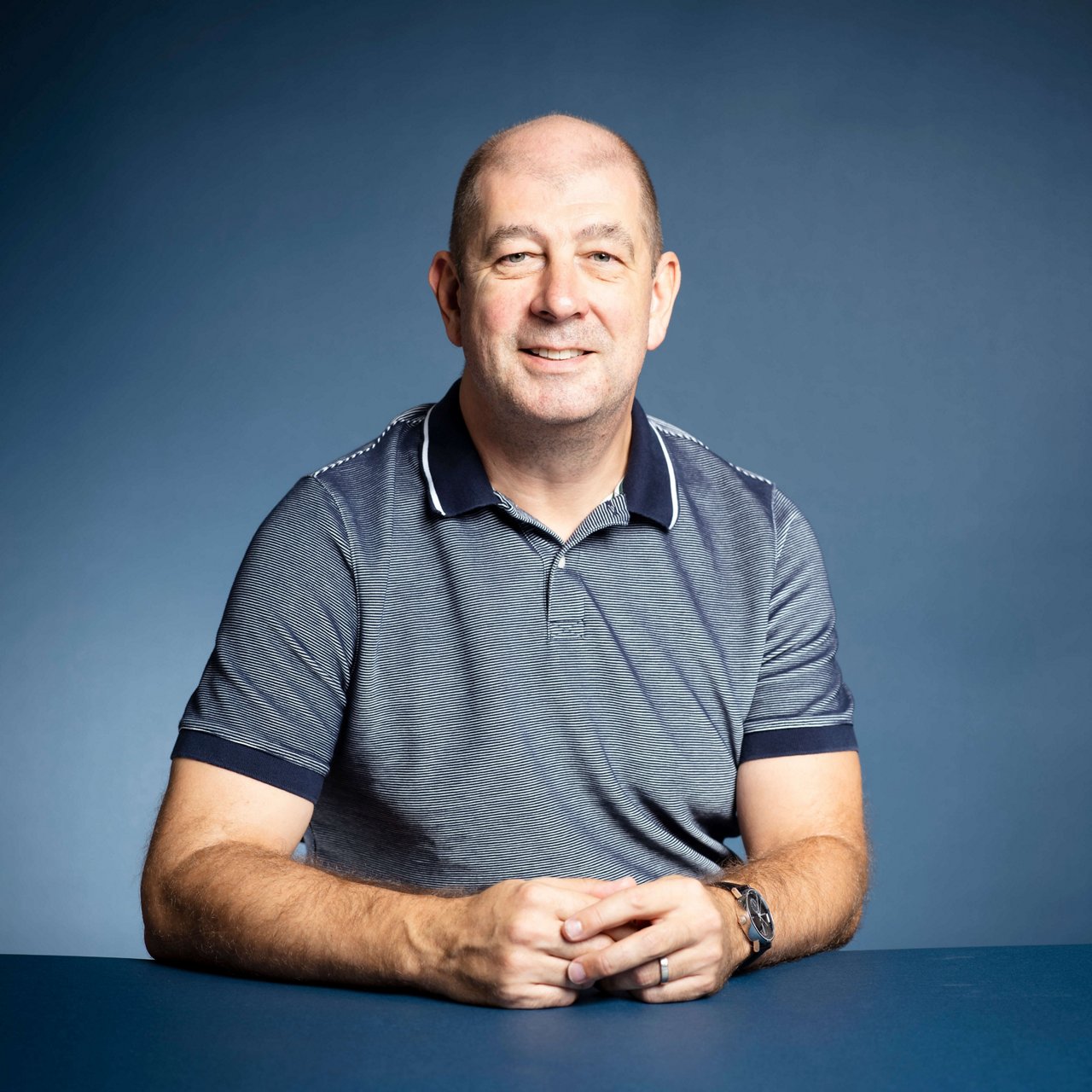
Written by Gregory Cosman, AI Taskforce Leader at Serviceplan Group Belux
Over the past year, I’ve had the privilege of leading AI transformation both inside an agency and inside the brands we support. This dual perspective has been rare, and it has revealed something fundamental about where marketing and agencies are heading. AI is no longer an add-on. It is no longer a tool that sits on the edge of a campaign, project or an experiment handled by a specialist team. It is becoming the operating system of modern marketing team. And because of this, more and more brands are naturally moving toward In-Housing their AI capabilities.
This shift is not a trend, nor a buzzword that will fade with the next technology wave. It is a structural evolution in how organisations operate. The World Federation of Advertisers (WFA), in its 2024 Global Media Transformation & In-Housing Report, confirms this movement: a growing majority of multinational brands are bringing strategic and digital capabilities closer to the core of their organisation, driven by the need for greater control, speed, consistency and integrated intelligence. My own experience this past year strongly echoes these findings.
What I’ve seen repeatedly is that as AI becomes deeply connected with the heart of a brand ,influencing its content engine, creative decisions, customer experience, service design, insights and operational flows , it becomes nearly impossible to keep this capability fully outside the organisation. There is simply too much learning and too much strategic intelligence embedded into datasets and/or agents for companies to outsource their most critical asset. AI captures the way a brand thinks, behaves, speaks and serves its customers. When this becomes the case, the capability must live internally.
Many brands begin their AI journey through experimentation with agencies. This is natural and often necessary. Agencies provide the spark, the acceleration, the first proofs of value, the creative stretch. But very quickly, brands realise that experimentation is not transformation. Real transformation requires internal ownership. It requires building in-house teams who understand not only the technology but the brand’s culture, constraints, rhythm and decision-making logic. It requires internal governance that protects quality and brand safety. It requires internal product ownership so that AI does not become a series of disconnected tools but a coherent system that evolves with the organisation. AI changes how decisions are made, how content is created, how insights emerge, how performance is optimised and how the entire marketing organisation operates. These are not tasks that can remain external. They belong to the centre of the enterprise.
Yet there is a misconception circulating in our industry: that the rise of In-Housing marks the decline of agencies. What I have experienced ,both inside an agency and alongside CMOs is the opposite. In-Housing does not diminish the role of agencies. It transforms it. It forces agencies to become better, more strategic, more embedded and more essential than ever.
Inside my own organisation, I have witnessed how AI has changed the expectations placed on agencies. The role is no longer limited to producing assets or executing campaigns. The new value lies in helping brands design their AI operating models, setting up agentic workflows, training internal teams, ensuring quality, advising on tooling architecture, supporting cultural adoption and providing flexible capacity where needed ,onshore, offshore or embedded. Agencies become capability builders, not just producers. They become co-pilots in the transformation rather than external executors. They help clients stand up their internal AI teams, not replace them.
Over the last year, I have seen how difficult it is for brands to scale AI when they rely exclusively on external support. They can experiment, but they cannot industrialise. They can automate tasks, but they cannot redesign systems. They can deliver isolated wins, but they cannot build sustainable capability. Without internal ownership, AI remains a tool. It never becomes a strategic advantage.
On the other hand, the brands that embraced In-Housing made measurable leaps. Their creative teams became augmented and faster. Their data became actionable instead of siloed. Their content pipelines became more coherent. Their decision-making accelerated. Experiments that once took months could be executed in days. And perhaps most importantly, their AI capability became part of the brand’s identity, not a series of external deliverables.
Yet none of this success happened in isolation. Every successful in-house AI model I have worked on required a strong partnership with an agency capable of guiding, challenging, training and extending the brand’s internal capabilities. In-Housing is not a rupture. It is a co-evolution. The brands that thrive are those who build strong internal muscles while maintaining strong external partnerships. And the agencies that thrive are those who evolve their role to support internal empowerment, not dependency.
The industry is entering a new phase where In-Housing becomes the natural consequence of AI becoming core. And the agencies that will remain relevant — and even more valuable — are those who embrace this reality. Agencies that help clients build internal strength. Agencies that place capability before deliverables. Agencies that see themselves as transformation partners rather than production engines.
After a year spent working on AI transformation from both sides — inside an agency and inside client organisations ,I am convinced of one thing: the future belongs to brands that build strong in-house AI capability, and to agencies that know how to help them do it.
This is the new partnership model.
This is the new creative operating system.
And this is the next chapter of modern marketing.
