







AI, Distribution and the Convergence of Commerce
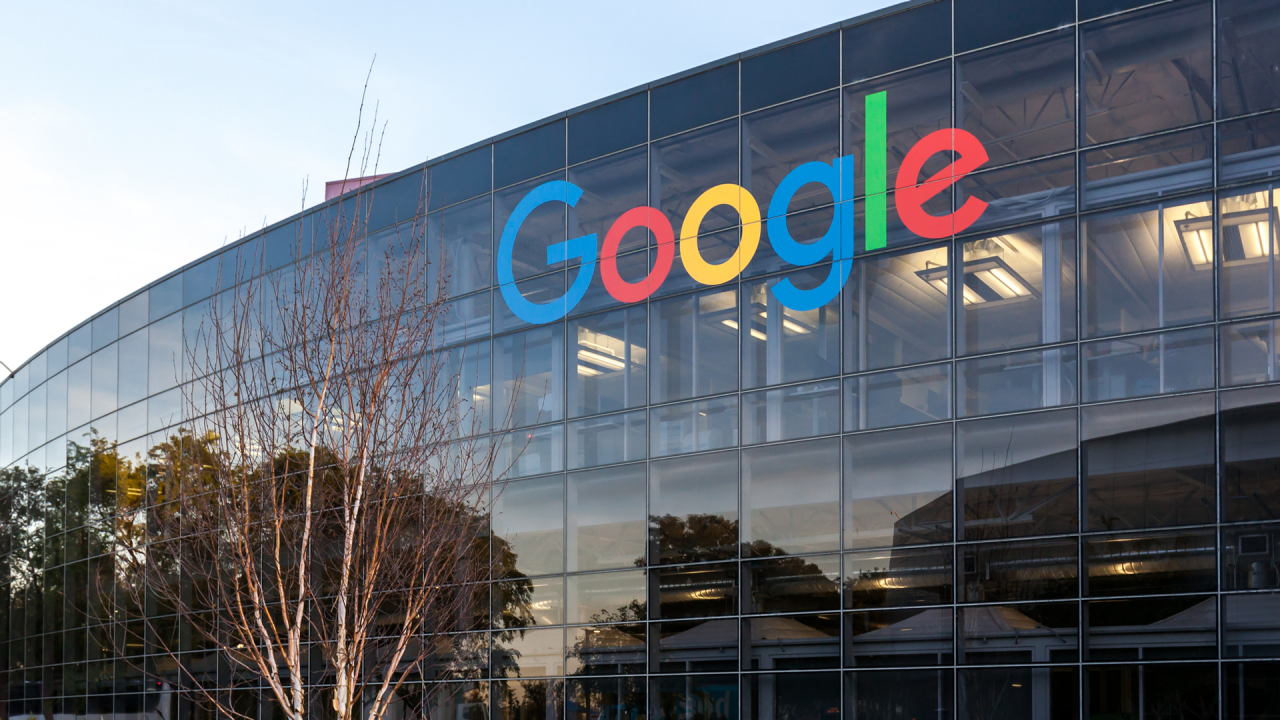
No New Year’s resolutions for Google. January has begun with two significant announcements that have clearly been in development for some time, and which underline how central AI has become to Google’s go-to-market strategy.
Within the space of days, Google has announced the launch of personalised shopping ads within AI Mode, alongside confirmation that Apple will use Google’s Gemini large language models to power much of its AI stack, including Siri.
Individually, each announcement is notable. Taken together, they reinforce a broader truth. AI is now shaping how consumers discover, evaluate and transact, and in doing so is creating new sources of commercial power.
From Automation to Scaled Adoption
Much has been written about the speed of AI adoption. ChatGPT’s rapid rise to 100 million monthly active users, achieved in just two months compared to TikTok’s nine and Instagram’s two and a half years, has made it the poster child for large language models.
However, the next phase of the AI arms race is no longer about novelty or experimentation. It is about distribution and integration into existing behaviours. The platforms that win will be those that embed AI where users already are, at moments that already matter, unlocking scaled adoption and, critically, sustainable profit.
When Gemini Met Siri
Apple’s multi-year agreement to use Google’s Gemini models to power Siri represents one of the most consequential platform partnerships in recent years.
Beyond the immediate headlines, the strategic implications are clear. With Gemini already integrated across Samsung and Pixel devices, this deal means Google’s AI will effectively underpin interactions across close to 90% of the UK mobile market. For Google, this delivers not just commercial upside but access to an unprecedented volume of real-world queries and interactions to improve its models.
For Apple, the benefits are equally tangible. Siri has historically lagged behind competitors in its ability to function as a true assistant beyond basic commands, a limitation many users will recognise from daily experience. Integrating Gemini materially raises the quality ceiling of Apple’s voice assistant and broader AI experiences.
Unsurprisingly, such scale raises questions around competition and concentration of power, with Elon Musk labelling the partnership an unreasonable concentration. Yet this deal reflects a pragmatic reality. AI capability has become too complex, capital-intensive and fast-moving for even the largest platforms to go it alone.
Personal Shopping for the Agentic Age
Personalisation in advertising is not new. What is new is the convergence of agentic AI and commerce into a single, closed-loop experience.
Google’s personalised shopping ads in AI Mode mark a shift from directing users to options, towards actively guiding them through decision-making and purchase. Combined with announcements around brands being able to build business agents directly within Google Search, this signals a future where discovery, consideration and transaction increasingly happen in one place.
While the initial rollout is US-only, the implications are global. Consumer journeys are compressing. In many categories, they may soon be reduced to two dominant phases, discover and transact. Here in the UK we must keep a close eye on the rate at which advertisers in the US adopt this approach which whilst it may promise increased conversion rates, lacks information around the costing and buying methodology to ensure incremental profit.
What This Means for Brands
For UK brands, this evolution presents both opportunity and risk.
Retailers with competitive pricing and promotional strategies are likely to benefit most in the short term, as personalised offers become a powerful lever for capturing share. However, for categories with longer consideration cycles, such as automotive, finance or travel, success will depend on visibility across the full discovery ecosystem, including AI assistants, video platforms and trusted editorial environments.
Understanding where and how consumers encounter brands before purchase will become more important than optimising any single channel.
Considerations for Future Discovery
As with all AI developments, familiar tensions remain, privacy vs utility, control vs capability, and experience vs monetisation. But the more pressing challenge for marketers is adaptation.
A practical starting point is conducting a GEO (Generative Engine Optimisation) audit to understand how and where brands appear within large language models, aligned to the types of queries users are making. Beyond this, brands should assess how discovery happens outside traditional search. For some, investment in influencer strategies may provide the social proof and confirmation bias that AI-mediated journeys increasingly reward.
Measurement must evolve in parallel. AI-driven shopping experiences and assistant-led discovery will disrupt conventional attribution models. Without rigorous incrementality testing, there is a real risk of over-crediting performance that is simply being re-routed through new interfaces.
The Final Word
AI is becoming the primary interface between brands and consumers. It now underpins not only large language models, but also content creation, targeting, bidding and discovery across the digital ecosystem.
Brands that focus on how they show up, not just where, will maintain media maturity and unlock meaningful performance gains. For Google and its competitors, the pace of AI adoption is increasingly driving collaboration over competition, as platforms race to become the trusted choice at the most influential moments of the consumer journey.
For more information on this, speak to our team of experts today.


