




Key Messages
- AI creates more time for real leadership.
- Leadership shifts from control to enablement.
- Human judgment and responsibility remain essential.
More Tech, More Time, More Leadership: Management in the Age of AI
Lately, while talking to colleagues and clients, find myself increasingly being asked the same question: Will AI make managers obsolete?
My answer is no. The shift already underway, with AI dismantling years of accumulated managerial and coordination complexity, will not eliminate management. It will eliminate many of the tasks that have kept managers from actually leading.
That is the real opportunity of AI in management: not simply to save time, but to give leaders the time to lead.
The time AI frees up should be reinvested in what only people can provide: direction, trust, judgment and responsibility when there is no obvious answer.
The question, then, is what managers do with the time AI gives back to them. I believe it should be reinvested in three areas:
Developing People. Improving Processes. Encouraging Ownership.
1. Developing People: Less controlling, more coaching
Reviewing and approving work as well as monitoring progress have long occupied a significant part of a manager’s day. These tasks will not disappear entirely, but AI is already significantly reducing the time they require, and this trend will only accelerate.
Managers should use that time deliberately to focus more on helping people develop, adapt and make better decisions: coaching teams, building AI literacy and giving people the confidence to work in new ways.
This is particularly important because AI creates uncertainty faster than many organizations can adapt to it. Employees need more than access to information and tools. They need leaders who can explain what the change means, establish priorities and provide a credible perspective on what comes next.
At Serviceplan, we encourage an “Explore More” mindset: staying curious, acting boldly and remaining open to change. But curiosity alone is not enough. People also need clarity about where they are going and why.
The manager’s role is therefore shifting from controlling execution to enabling progress.
2. Improving processes: Rethink the system, reset priorities, refocus management
The traditional management toolkit was built around coordination: tracking projects, routing information, synchronizing teams and keeping workflows moving.
AI increasingly supports and automates many of these activities. The opportunity is not simply to complete the same processes faster. It is to rethink where management creates value: resetting priorities, bringing different and new disciplines together and deciding where human involvement matters most.
This is what we are pursuing across Serviceplan Group with our House of AI. The digital twin of the organization is designed to make knowledge and capabilities easier to access, connect people more effectively and improve the way work flows, both internally and externally.
For us, this is a leadership project designed to give managers better tools to decide what matters, where attention is needed and how teams can work together more effectively.
Judgment becomes even more important as organizations gain access to similar AI models, data and recommendations. AI can generate options, but it cannot determine which option is right for a particular brand, culture or situation.
That requires human judgment.
At Serviceplan MAKE, for example, technology allows us to produce content at a scale that would previously have been impossible. But scale alone does not create differentiation. The decisive questions remain human ones: What should we create? What should we ignore? Where should a brand take a stand?
Developing that judgment, sharpening it through experience and helping others build it is once again becoming a central leadership responsibility.
3. Encouraging Ownership: Soft skills for Hard Outcomes
Many people hope that AI will make difficult decisions easier. In some cases, it will. It can analyze more information, identify patterns and present possible courses of action.
But it cannot, and should not, take responsibility. That remains a fundamentally human responsibility.
The more autonomous AI systems become, the more clearly leaders must define objectives, set guardrails and decide when human intervention is required.
Good managers will not use AI to avoid difficult decisions. Nor will they shield their teams from responsibility. They will create an environment in which people can make informed decisions, take calculated risks and learn from mistakes.
This also changes which leadership qualities become most valuable. When information and technical capabilities are widely available, qualities such as empathy, trust, courage, cultural understanding and sound judgment become more distinctive.
These are often described as soft skills. In reality, they produce hard business outcomes. They determine whether individuals can work as a team, whether organizations can remain resilient in times of uncertainty and whether clients trust their partners to make the right calls.
The opportunity is better management, not less management
AI will remove friction from management. It will simplify reporting, coordination and information processing. That is good news.
But freeing up management time is not the same as improving management. What matters is how leaders reinvest that time.
The opportunity is to spend less time administering work and more time leading: developing people, improving how organizations work and enabling others to take ownership.
AI may give managers more time. What they do with it will define the quality of leadership in the AI age.
First published in The Drum.
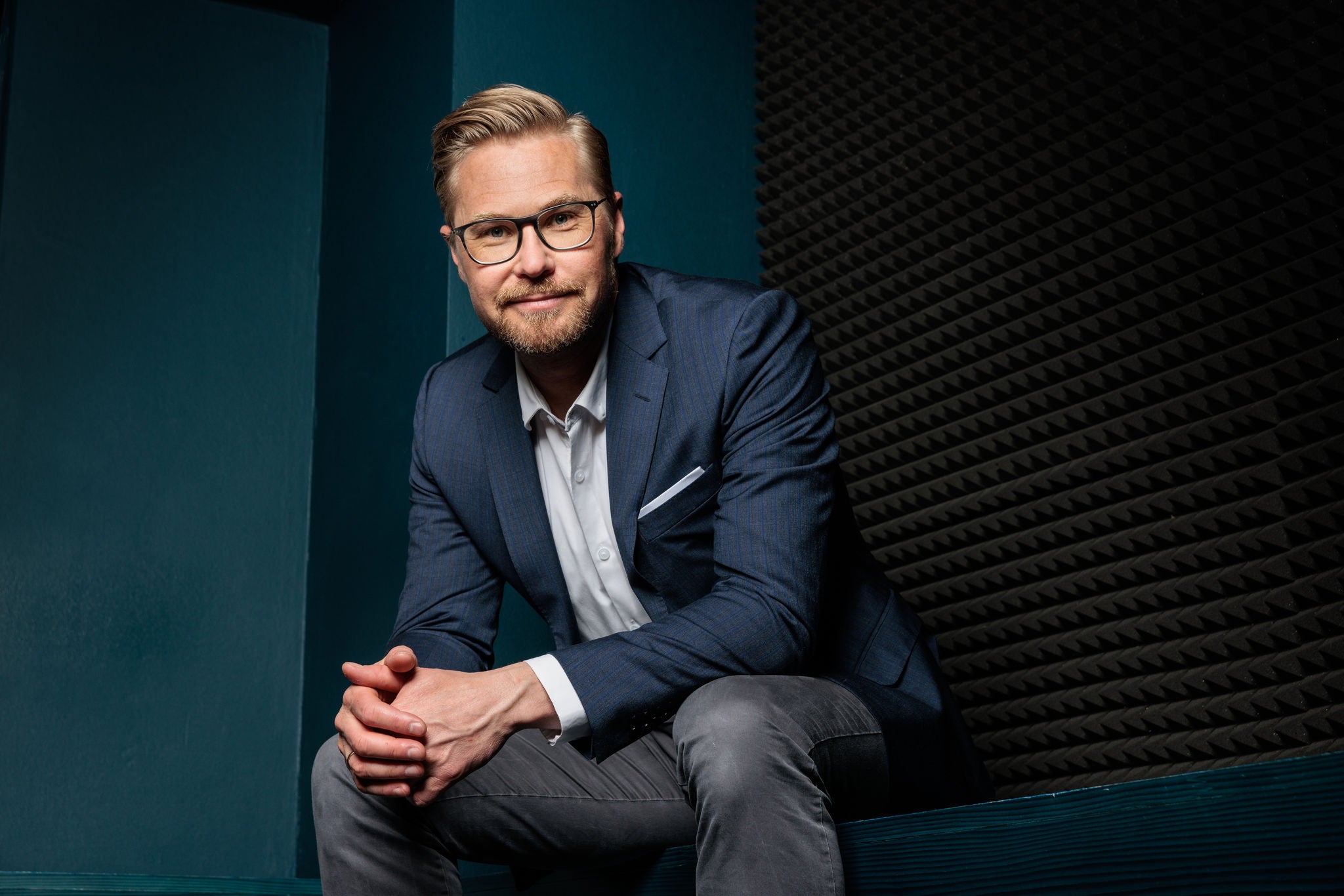
Florian Haller
About the Author
After studying Economics at the University of St. Gallen and several years at Lintas in New York and Procter & Gamble in Brussels and Geneva, Florian Haller joined Serviceplan as Managing Director. In 2000, he moved inhouse from the creative agency over to the Serviceplan Group Holding as new Managing Director. In July 2002, Haller became CEO of the Serviceplan Group. He has continuously worked on internationalizing the agency group and establishing it as a global player. Today, Serviceplan Group has Houses of Communication in all important markets with over 6,500 colleagues worldwide.
You might also be interested in:


About Serviceplan Group
Serviceplan Group is the largest independent, partner-led agency group in Europe, headquartered in Munich. Founded in 1970 as a classic advertising agency, Serviceplan has since developed the “House of Communication”, an integrated agency model that combines all modern communication disciplines under one roof: Consulting & Implementation, Creative & Content, Media & Data, and Experience & Technology.
As a Creative Solutions Partner, Serviceplan Group brings together experts and expertise from across disciplines in integrated teams. The “House of AI” adds an AI-powered layer to the “House of Communication”, connecting human expertise and AI across the entire marketing value chain. This enables tailored solutions for marketing, communications and transformation that reduce complexity and drive growth.
With more than 6,500 employees across over 43 locations in 24 countries, Serviceplan Group has a global presence in all major economic regions. Its core agency brands are Serviceplan, Mediaplus and Plan.Net.