







If the breathtaking potential of AI for marketing wasn’t evident before, the arrival of AI agents certainly made it clear. Will people even be needed for marketing in the future? In an (optimistic!) essay, Barbara Evans, Managing Partner of the Mediaplus Group, explores the various perspectives. Plus: Managing Partner and Mediaplus creative expert Maximilian Florian Schöngen puts forward six exciting hypotheses about the role of AI and humans, and Sanja Scheuer, Chief People Officer of the Serviceplan Group, identifies the skill set that will be vital in the future.
The future is ours!
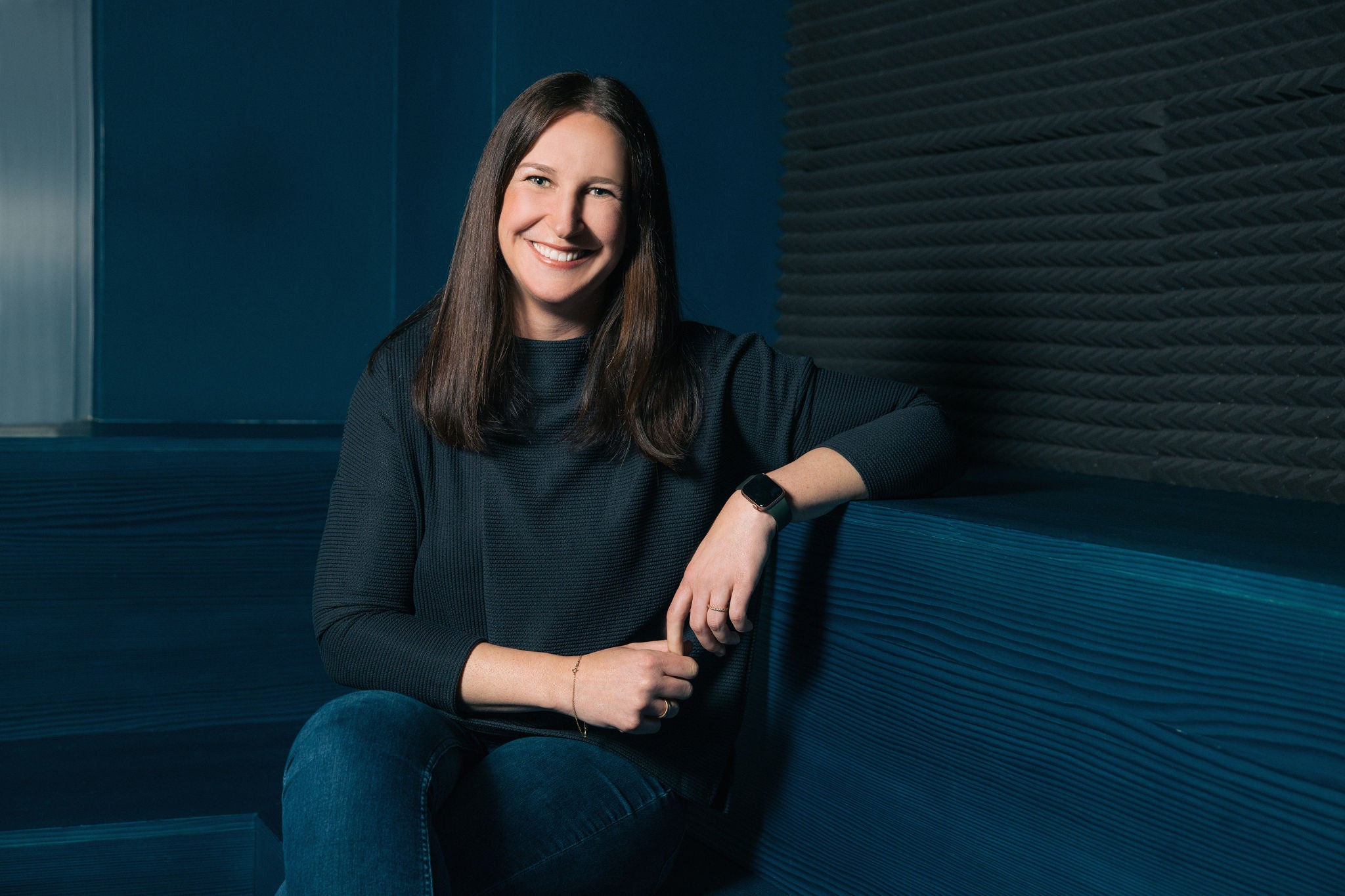
Barbara Evans, Managing Partner Mediaplus Group
How do you think this article was written? By a person? Or with the aid of artificial intelligence? It’s getting more and more difficult to tell the difference. So I will give you the answer shortly. But first let’s think about the tasks that AI can perform in marketing today, tomorrow and in the future. And what role people will play in that. Or will there come a point when we won’t be needed at all?
The speed at which applications in the field of artificial intelligence are developing can sometimes take your breath away. There appears to be no end of possibilities. And the speed at which AI can perform routine tasks that would have previously taken us hours or even days is staggering.
Just like any revolutionary technological development, advances in artificial intelligence are evoking mixed feelings. Some people are fascinated and curious, while others are uncertain what to make of it. And there are also those who are deeply concerned. Younger people in particular are afraid that AI might eventually replace them in their jobs (Artificial intelligence – Concerns about being replaced | Statista).1
But I for one firmly believe that there is no reason to panic. Regardless of how fast technology develops, our human strengths will not only remain but become even more important.
AI is omnipresent
80% of companies around the world use artificial intelligence in at least one area of their work (Artificial intelligence – Uses in 2024 | Statista).2 In Germany, 86% of companies use AI applications when contacting customers and half of all companies use them in marketing and communication (Artificial intelligence – Usage in companies in 2025 | Statista).3
We also make use of new technologies here at Mediaplus and throughout the entire Serviceplan Group. Needless to say, this also includes artificial intelligence, which allows us to process immense amounts of data in next to no time. Target groups need to be analysed, trends recognised, markets observed, and campaigns optimised (in real time). And particularly when a campaign is being rolled out, time is money. The faster we realise when creations or placements are not performing optimally, the sooner we can learn directly and adapt our strategies continually with a view to yielding the best possible results for our customers.
The various AI applications based on large language models (LLMs) are immensely useful in that they help us to develop concepts, visualise sketches, create charts, summarise texts, produce design variants, and much more besides.
But did you notice something about the above list? AI is being used to take over repetitive tasks. The routine, laborious work. It’s a part of our everyday activities in countless areas. And it has made a noticeable impact, making our daily work faster, more efficient and more data-driven. But AI is first and foremost a tool. One that gives us the freedom to do what we do really well. To do what sets us apart as humans: being individual, creative, surprising. And breaking with expectations. The factors that make all the difference.
Good ideas don’t develop from what has already been, but rather from what no one has ever thought of. This kind of ‘skip-thinking’ is profoundly human. And this is exactly what will become more and more valuable as the deluge of generic content increases. Because only humans really know how to catch attention.
The secret of strong campaigns
A good story evokes emotions. Only then does it have a lasting impact. And, of course, that is ultimately what we are trying to achieve. Brands need connections with depth, not just contacts. And for this we need people. With ideas. Intuition. And the courage they need to break new ground.
Thanks to AI, generating content is now child’s play. This is why we are seeing more and more of it. More text. More images. More videos. But this also means that it’s all the more important to navigate through the huge mass of information – and this will also be the case in the future.
A machine can generate stories. But it doesn’t understand why a story gets under people’s skin. That remains our job as humans. As AI can do so much, we need to concentrate on what it’s not capable of.
So when we talk about the future of marketing, it’s not about either humans or AI. It’s about a combination of them both. And that doesn’t begin with the technology – it begins with us and with our willingness to rethink roles. Technology and humans should not be seen as polar opposites in competition with one another but rather as parts of a whole that inspire each other.
The future is hybrid – and profoundly human
Going forward, AI will help us to work better. Faster. Smarter. It will analyse, optimise and personalise. Help to reduce our workload. But we will be providing the context, defining the direction and also bearing the responsibility. We will develop ideas that no one sees coming. We are the ones who will read between the lines, read the room, develop a gut reaction. We will still be the ones who say: “I know that the figures suggest something else, but my gut tells me that this is the way to go.”
I wish we would stop asking ourselves if AI will replace us and instead start figuring out how we want to use it. As a sparring partner. As a muse. As a challenge.
After all, the best ideas never emerge on their own. They arise through friction. Through dialogue. Through conflict. Between different disciplines and also between analysis and intuition. Between humans and machines.
And maybe the most encouraging realisation is that the more AI can do, the more importance will be attached to what it can’t do. Feeling. Inspiring. Moving people. So let’s continue to focus on those. Because the future is ours. Together.
PS: I still haven’t given you an answer: I wrote over 80% of this article myself. Why so much? Because I found the AI text boring. It was well structured. Clearly formulated. Well argued. But it didn’t grab me – and, above all, it just wasn’t personal enough. But do you know what? The initial brainstorming with ChatGPT – carried out in no time with just a few clicks – was a great help. So I would say that the process of writing this article was hybrid. Like our future.
The gloriously uncomfortable role of humans in the age of AI
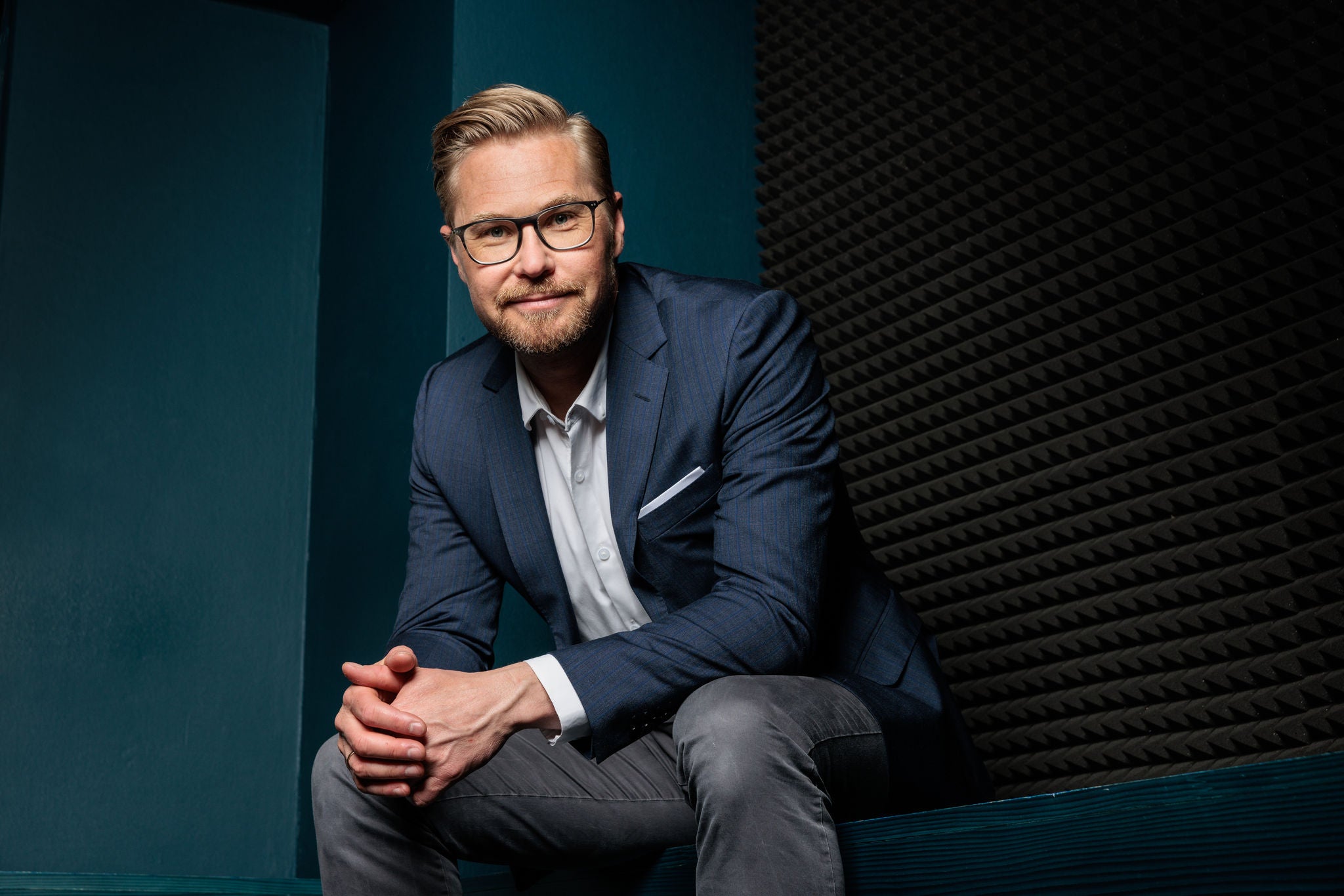
Maximilian Florian Schöngen, Global Creative Lead & Partner Mediaplus Group
In strategy, AI is establishing itself as the ultimate planner’s Swiss army knife. It can analyse historical campaign performance, generate heatmaps, simulate A/B tests and give you 28 angles on why Gen Z loves irony but hates advertising. But here’s the rub: strategy is still storytelling in disguise. It’s not just about aligning data points; it’s connecting them with intent. Humans decide what the data means, where the opportunity presents itself and how to frame it in a way that makes sense not only logically but emotionally as well.
What AI lacks: taste. It can’t tell a good idea from a boring one. It doesn’t get the chills. It doesn’t laugh unexpectedly. And it doesn’t remember the client’s weird obsession with penguins. But you do.
AI will not kill creativity. But it will kill lazy creativity. Uninspired decks. Predictable thinking. Long-winded research. It will raise the bar so high that ‘good enough’ will be a creative death sentence.
As AI gets even more powerful, the value of a single great idea will increase exponentially. Because now you can scale it, test it, adapt it and roll it out globally faster than ever before. The good idea becomes the atomic unit of value. And that, my fragile, brilliant human friend, is still your job.
In the next five years, media and creative agencies will operate more like human-AI symphonies than traditional teams. Your top performers won’t just be good writers or designers, they’ll be brilliant prompt engineers, AI collaborators and creative orchestrators.
The creative industry will become more human, not less. Because our role won’t be implementing ideas, it will be judging the result. And judgement, dear reader, cannot be automated.
The future called. We picked up.
Sanja Scheuer, Chief People Officer Serviceplan Group
What kind of future do we expect?
To be honest, we are not waiting for the future. We have been working with it for a long time now. In communication, in our teams, in every idea, in decisions and in the way we work together.The future is happening here and now – not someday but every day.
In an industry in which change is the norm, strategies are an important compass – but it’s people who ultimately make the difference. People who remain flexible without losing clarity. Who are open, remain courageous and are curious about trying out new things.
For me, the future skill set doesn’t begin with a checklist but rather with the following question:
What attitude do we need to shape tomorrow rather than chasing it?
Agility isn’t enough. Let’s get hungry!
Agility is a must. But if you want to shape things, you need to have an appetite for uncertainty. After all, we don’t just want to keep up – we want to lead the way. And that means driving change rather than tolerating it.
We speak human. And machine.
For us, technology is not something alien – it’s part of our DNA. AI, automation, tools – everything we need is there. What really matters is that we know the effect that technology has on people and how to combine the two in our thinking without treating one as less important than the other.
Creative thinking meets system hacking.
Understanding systems means being able to change them. We don’t do things by the book. Creativity and lateral thinking are methods that we use to question existing patterns and create new solutions of real substance.
Curiosity remains. Always.
Knowledge is changing and that’s a good thing. But curiosity remains. It’s the engine for everything we do. We are driven by questions, not answers. Asking questions keeps you relevant. Changing perspectives keeps you agile.
Emotions are data too.
Good leadership is not just about number-crunching – it’s about feeling too. Listening, watching, observing tensions – that’s not a soft skill. It’s challenging people-work that provides orientation when everything else is in motion.
Failing is still progress.
We know that things don’t always work out the way we had planned. That’s fine as well. The important thing is what we do with these false starts – and this is usually when our best ideas come to the fore. We make mistakes, but mistakes don’t bring things to a halt. They speed things up.
Will machines ever be capable of the human skills that I’m describing here?
I don’t think so.
Agility, sound judgement, creativity, curiosity, empathy, courage... Does that sound like a lot?
The future demands a lot. But it will also give back a lot in return: meaning, effectiveness, real creative freedom.
This future skill set is our tool – working with machines, not against them. After all, they are giving us a chance to reinvent ourselves over and over again. As people. As a team.
This belief guides my work as CPO. Because I don’t just see figures, strategies or structures – I see people with talents, questions, doubts and ideas. And this is exactly where our future strength lies – in the sheer diversity of our perspectives and in joining forces and working together.
About Mediaplus
Mediaplus is part of the Serviceplan Group and ranks among the world's leading independent media agencies. With around 2,500 employees at 25+ locations, the Mediaplus Group offers comprehensive media expertise at an international level. The media agency develops integrated media solutions along the entire value chain – from consulting and planning to implementation. The foundation is data-driven insights, technology-supported processes and cross-channel competencies, with the goal of efficiently managing media investments and achieving measurable results for clients.


