



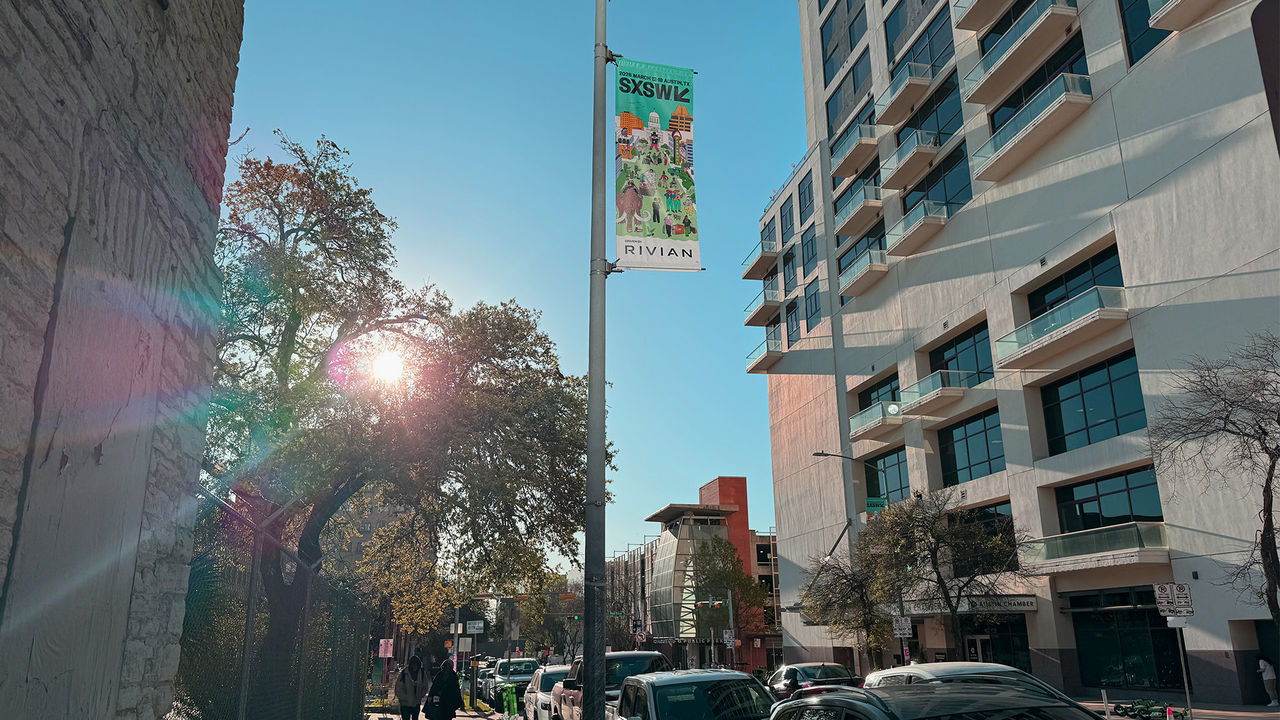


A key theme at this year's SXSW conference is what AI is doing to the humans on the other end. How emotional outsourcing, language contamination, and social isolation are quietly reshaping the people marketers are trying to reach.
What does that actually mean for brands? How should communication evolve when audiences, cultural context, and the way people discover products are all shifting at the same time? This question runs throughout the entire conference and crystallizes into three clear observations.
1. Creators are now infrastructure
Creator marketing is no longer a niche. For serious brands, it has become a structural part of the media mix. And the next generation is already pushing further: creators and even consumers becoming true business partners, co-builders of the brand itself.
At a packed session on world building over moments marketing, Ben Kay from WPP and Leandro Barreto, Unilever's CMO for Beauty & Wellbeing, laid out what that looks like in practice. The core idea: brands shouldn’t chase trends but participate and contribute to existing worlds. Communities have their own rituals, heroes, and inside language. To take part, you need to understand them. So far, established knowledge, but putting it into practice is not that easy.
Unilever now signs creators on 3-to-5-year contracts. Not as media inventory, but as co-authors of brand narratives. Dove has maintained one single belief and brand promise for 20 years while reinventing its expression every year. Hellmann's created a special garlic-scented edition of a vampire novel for BookTok creators. Different worlds, same strategic consistency.
At Nordstrom, this shift is even more concrete: Marie Langhout-Franklin, VP Marketing, shared that 60 to 70% of their content now comes from creators. Up from 20% a few years ago. The reason is simple: it performs better. Across every metric. Their advice for briefs? Half a page max. Tell creators what the job is, show them what's worked before, and then get out of the way.
The paid media implication is clear. Research shows that once a piece of organic creator content hits 1% engagement, pouring paid media behind it generates disproportionate returns. Organic and owned first, paid amplification second. That's the best practice. For now.
But the next challenge already looms on the horizon. At a trend session by consultancy In Good Co, Chris Danton and Kirsten Ludwig were sharp about Gen Alpha: these kids don't want to follow your brand. They want to build with it. They see themselves as co-authors. And the loyalty structures around them are shifting accordingly. American Airlines now lets members redeem miles for flight simulators and experiences, not just seats. The next generation follows people, not airlines. Brands that understand this build habits. The one that don't build points programs nobody might care about anymore.
2. The sameness tax
Design consultant Gulay Ozkan opened her book launch session with four photos of coffee shops. Bangkok, Amsterdam, Istanbul, Austin. They looked like the same place. Then four YouTube thumbnails covering wildly different topics – startups, productivity, neuroscience, love – all in an identical visual format.
Her argument: sameness is no longer a design trend. It's a systemic condition. She traces it through three layers. Primal sameness: cultures have always repeated patterns. Structural sameness: market logic and efficiency selecting what creativity survives. Algorithmic sameness: platforms optimizing everything toward the statistical average.
Matt Klein from Reddit sharpened that point: He analyzed hundreds of trend reports and found that 90% of insights come from just a handful of cities. The language is coded as dominant or residual, almost never genuinely emerging. His summary: if everyone reads the same reports and benchmarks the same competitors, everyone arrives at the same place. The result is what he called the "fellow kids" effect. Brands chasing culture instead of making it. Or as Mariana O’Kelly from LEO Chicago asked in her session: are you creating content for the algorithm or are you actually creating culture that the algorithm can’t ignore?
The media strategy consequence is real. Andrew Warden, CMO of SemRush, presented data showing that Large Language Models are now actively filtering out what he called "carbon copy content." He introduced the concept of the "bland tax": an invisible penalty brands pay for playing it safe. In a world where AI increasingly mediates discovery, being average means being invisible.
Patagonia was his standout example. They dominate sustainability-related AI search queries because every signal points in the same direction. Founding narrative. Interactive footprint trackers. Repair rate data. Advertising designed to spark conversation. It's obsessive consistency across every touchpoint. And LLMs reward that, because they cross-reference what brands say about themselves against what customers, partners, and communities say about them.
3. The discovery layer is being rebuilt
Chris Danton put it bluntly: future consumers might not be googling anymore but deploy shopping agents instead. What you think websites are today, they will no longer be in a year. That sounds dramatic. But when you combine it with the SemRush data on LLM behavior, it starts to feel conservative.
LLMs don't just scrape your website. They cross-reference signals from Reddit, LinkedIn, YouTube, podcasts, and customer reviews. If your product marketing says one thing, your PR team another, and your content team a third, AI sees inconsistency and downgrades you. Signal alignment across platforms is the new SEO. Not instead of technical optimization, on top of it.
Tech expert Ian Beacraft took this even further: Companies need to encode their values and what they stand for into systems that AI agents can actually read and work with. Because increasingly, the first touchpoint between a consumer and a brand won't be a human decision. It will be an algorithm recommending, filtering, or excluding you.


?qlt=85&ts=1774269037812&dpr=off)

What connects all three
The thread across creators, sameness, and discovery is the same: the era of controlled brand communication is ending. You can't control what a creator says about you in year three of a partnership.
You can't control whether an LLM includes you in its answer. You can't control how an algorithm categorizes your content. What you can control is clarity. Who you are. What you stand for and whether every signal, across every channel, tells the same story. The brands that understood this at SXSW weren't the loudest ones. They were the most consistent.
This article first appeared exclusively at Campaign Germany.
About Mediaplus
Mediaplus is part of the Serviceplan Group and ranks among the world's leading independent media agencies. With around 2,500 employees at 25+ locations, the Mediaplus Group offers comprehensive media expertise at an international level. The media agency develops integrated media solutions along the entire value chain – from consulting and planning to implementation. The foundation is data-driven insights, technology-supported processes and cross-channel competencies, with the goal of efficiently managing media investments and achieving measurable results for clients.