

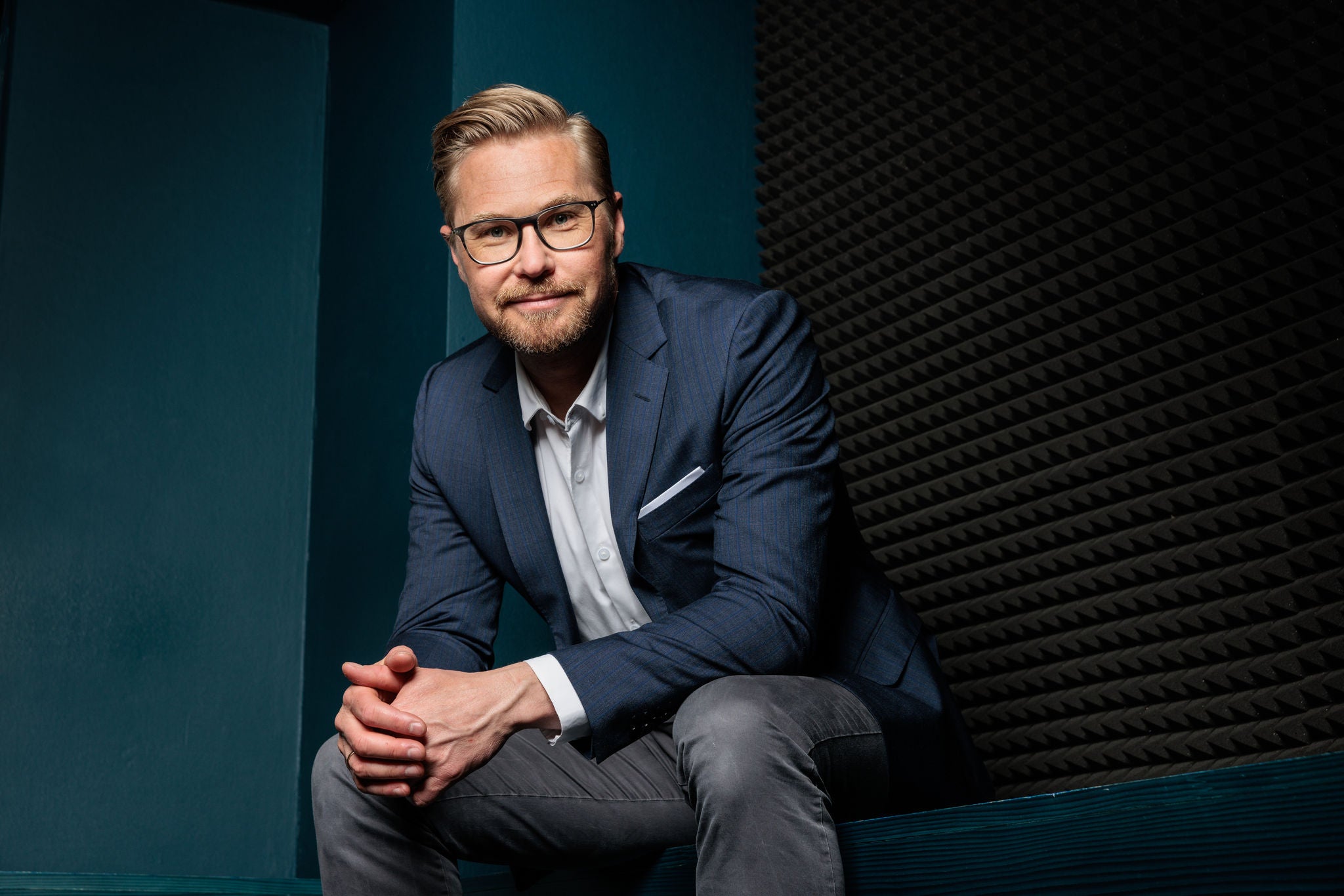
Managing Director Mediaplus Germany

Stephan Kopp is an expert for performance media, search, and analytics, with a particular focus on the interfaces between search engine optimization (SEO), artificial intelligence (AI), and data-driven marketing. Among his central areas of focus are the "Future of Search," the integration of AI in digital marketing processes, and the practical application of data- and analytics-driven strategies along the entire customer journey.

After his studies and stations in the digital and media industry, his path led him to Mediaplus, where he significantly shaped the development of Mediaplus Performance. In his role as Managing Director, Stephan Kopp stands for the combination of analytical precision and creative strategy.

Past appearances by Stephan:

Munich, October 14, 2025

Topic: The Secret Sauce: Why Next-Gen Marketing Demands Triangular Thinking 

Read the article here

Stephan's Topics

Neon blue icons representing speed, progress, settings, and direction on a dark background.

Performance Media

Efficiency and measurable results are at the center of performance media. Instead of wastage, every contact counts: target audiences are reached with precision, budgets are deployed flexibly, and campaigns are continuously optimized. Stephan Kopp shows how data-based approaches and automation secure maximum media impact and how performance media today requires smart strategies and continuous adaptation more than ever. To meet the current demands of the market, performance media combines modern technology with comprehensive planning. Intelligent algorithms analyze user behavior in real time and thus enable dynamic placement of advertising materials that reach potential customers precisely where they can be reached. Through the seamless integration of first and third-party data, wastage is minimized and the customer journey accompanied optimally at all touchpoints. Transparency and traceability of measures are additional central elements: with the help of detailed reporting and flexible dashboards, decision-makers maintain full control over the performance of their deployed campaigns at all times. This creates a cycle of testing, learning, and optimizing that creates sustainable competitive advantages. Those who succeed in this environment today rely on a combination of technical know-how, data-driven insights, and creative impulses – for marketing that truly works.

Digital illustration of a human brain surrounded by a circuit board pattern.

Future of Search

AI-based search technologies are changing the rules of the game: classic rankings are losing in importance, while smart algorithms steer visibility in conversational search. Relevance and context become decisive so that content appears in AI-generated answers. Stephan Kopp shows how brands must adapt their search strategies in order to remain successful in the increasingly digitalized environment. Content must be structured so that it can be clearly interpreted by AI systems and integrated into dynamic dialogues. Companies should strongly reinforce semantic search optimization, structured data, and natural language flow to ensure that their messages remain relevant across the most diverse search queries. This is no longer just about providing content for classic search engines, but also for learning AI models that place context, user intent, and situational relevance more strongly in focus. Putting the real needs of his target audiences at the center, he can deliver convincing and visible answers in the new search ecosystem. Brands must therefore be flexible and agile in reacting to technological innovations and continuously optimizing their content. Those who today invest in conversational search and AI-optimized content secure sustainable visibility and competitiveness in an increasingly algorithmically determined search landscape.

AI text with a stylized human face silhouette and glowing effects.

AI

Stephan Kopp shows how AI is transforming the media everyday: automated processes, intelligent data analyses, and personalized addressing are becoming the new standard. Through the targeted use of artificial intelligence, campaigns gain in speed, precision, and impact. This opens up a new dimension of performance in digital marketing. AI-supported tools are increasingly taking over routine tasks – from target audience segmentation to budget allocation – and enabling faster and more efficient implementation of campaigns. Advanced Analytics delivers continuous insights with which advertising measures can be optimized in real time. At the same time, machine learning models ensure more individualized addressing of users by playing relevant content at the right time and on the preferred channel. The result: marketing teams can focus more strongly on strategy and creativity while AI reliably supports data-based decisions. Through the integration of predictive analytics, not only current trends are recognized, but also future developments anticipated, enabling proactive campaign management. Companies that rely on AI-based solutions increase efficiency and effectiveness and position themselves as pioneers in the digital competitive landscape.

White magnifying glass icon on a dark background.

New Search Revolution

Stephan Kopp shows how AI is changing the rules of the game for SEO and SEA. Classic algorithms are losing importance – AI decides which brands remain visible. Content must become more relevant and context-rich in order to appear in AI-generated answers. Semantic search optimization, structured data, and the consistent orientation toward user intentions are becoming increasingly important – successful brands rely on content that is convincing not only in natural language flow, but is also present in dialogue-based search results as a machine-readable source. AI-supported analysis tools help to recognize rapidly changing search trends and user needs early and to tailor content precisely to them. In the area of SEA, the focus is also shifting: automated campaign management and the use of predictive analytics are becoming standard and increasing the effectiveness of measures. Companies that adapt their strategies to the changing search and consumption behavior not only increase their visibility, but also create sustainably relevant brand experiences – both for the algorithms and for their target audiences.

Robotic hand reaching toward an abstract network of connected points.

Agentic Browsing

The next browser generation is acting increasingly autonomously: agentic browsers like Atlas, Comet, or Edge Copilot complete tasks independently and are fundamentally changing the role of browsers. The talk shows how these technologies work, which current use cases there are, and what effects they have on marketing, e-commerce, and digital strategies. The transformation from display engine to intelligent assistant is not a future vision – it is happening right now. Already today, agentic browsers independently take over research tasks, fill out forms, compare products, and interact proactively with websites. For users, this means more comfort and efficiency, since repetitive tasks are automated. For brands and companies, new touchpoints are emerging: the visibility and presentation of offers will depend increasingly on how well content for collaboration with autonomous browser assistants is optimized. In e-commerce, changes are also becoming more far-reaching: purchase processes are accelerated, the browser makes recommendations, fills shopping carts, and initiates transactions. Marketing must react to this by providing relevant data, personalized addressing, and interfaces for automated interactions. Companies that set on these technologies early gain decisive competitive advantages, as they specifically address changed user needs and utilize new channels for customer retention and conversion.

Network of connected blue nodes and floating data visualizations on a dark background.

Analytics

With modern analytics, marketing and media strategies become more transparent, precise, and flexible. Data-based analyses show clearly what actually works – gut feelings are replaced by well-founded insights. Those who use analytics consistently can secure sustainable competitive advantages and steer campaigns effectively. Real-time measurements and individual dashboards make it possible to review the success of measures immediately and to react flexibly to changes in the market or in user behavior. Through the interlinking of different data sources – from web and app analytics through to CRM and sales data – a comprehensive picture of the entire customer journey emerges. Advanced analytics and AI-supported models deliver not only retrospective analyses, but also valuable forecasts for future performance. Budgets are thus allocated more precisely, target audiences segmented more accurately, and potentials identified early. Companies that use analytics as a central management instrument increase the efficiency of their marketing activities, sustainably improve ROI, and remain capable of action and successful even in dynamic markets.

More Experts:

Let's get in touch with us!
Sabine Rössing
Sabine Rössing
Mediaplus
New Business & Marketing
Let's get in touch with us!
Bitte geben Sie eine gültige E-Mail-Adresse ein

This site is protected by reCAPTCHA and the Google Privacy Policy and Terms of Service apply.