




Key Messages
The Kidult Economy describes a growing market in which adults are discovering toys, collectibles, fantasy worlds and creative hobbies or continuing interests from childhood.
For brands, the opportunity is not necessarily to create toys themselves, but to understand what excites people about these worlds and identify an authentic role they can play.
Long-term opportunities come from evolving storylines, products that inspire fandom, and experiences that enable communities to come together and participate.
Decoding Kidult Economy: We Just Want to Play!
Do you remember that feeling of walking through the toy department as a child? Standing in front of a shelf with wide eyes and a pounding heart, while in your mind you were already somewhere else. In a spaceship. In another world. Right in the middle of a story that was really only missing that one figure. And then the excitement when you were actually allowed to take something home with you. The packaging was still closed, but the adventure had already begun.
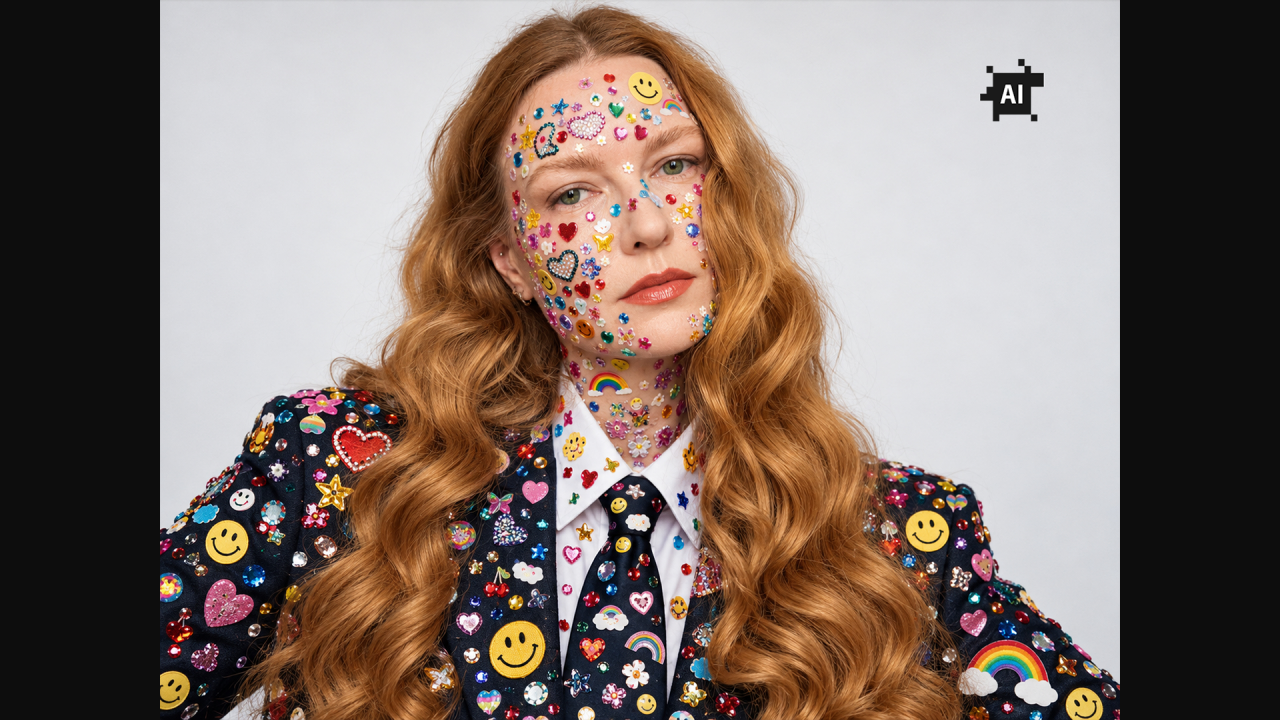
I am a Star Wars fan and collect figures and graphic novels. That feeling has never gone away for me. A story can inspire me so much that I want to have something from it at home, to read, look at and continue thinking about. And apparently, more and more adults feel the same way. For a long time, there was an assumption that “childlike” interests had to be left behind at some point. Today, every phone case is being bedazzled, a trend in which clothing, accessories, beauty products and everyday objects are decorated with glitter, crystals, pearls or rhinestones.
That boundary has become more fluid. We collect collectables, build elaborate LEGO sets, read (dark romance) fantasy novels or spend months creating a cosplay. Some rediscover old hobbies or fulfil wishes they previously could not afford with their pocket money. I celebrated my 40th birthday with friends at Disneyland. Others only discover a completely new world in their 30s or 40s.
The new target group is called Kidults.
Millennials in particular grew up with stories and characters that have stayed with them to this day. The “Lord of the Rings” book series became films, and a series like Pokémon became an entire identity. New stories such as “Harry Potter” were added, while old ones such as “Barbie” continued to be told. The relationship with these worlds had time to grow.
In its current “Toys and Play” report, YPulse describes how young adults are consciously creating space for creativity, trust and shared playful experiences amid economic uncertainty, digital overload and stress. Something you look forward to and enjoy engaging with over months and years.
For companies whose business has long depended primarily on children, this is shifting the underlying basis. Adults are becoming increasingly important as buyers. The enthusiasm for fantasy worlds and storytelling exists across very different lifestyles. With children, without children, together with them or simply for themselves and the community. In real life or digitally.
What does this have to do with my brand?
This is precisely where it becomes interesting for brands. Because this enthusiasm does not stay on the toy shelf. It helps determine where we travel, what we give as gifts and who we spend our weekends with. Someone who can immerse themselves in Middle-earth may also be interested in travelling to the filming locations. Someone who loves cosplay needs make-up. And snacks are usually part of a games night as well. As a brand, I therefore do not need to manufacture collectable figures in order to play a role. I need to understand what excites people about these worlds and what I can contribute.
A look at toys alone shows how great the economic potential is: In the US, according to the market research institute Circana, around 9.1 billion dollars, and therefore approximately one fifth of toy sales, came from products for adults aged 18 and over in 2025. This was almost 20 percent more than in the previous year.
In Germany, toys for people aged twelve and over generated around 1.8 billion euros in sales between October 2024 and September 2025: 35 percent of total toy sales, with growth of 15 percent compared with the previous year. This shows quite clearly how far the market has now moved beyond the traditional children’s room.
For me, the answer begins with the role a brand wants to play in everyday life.
LEGO × Formula 1: From the Children’s Room to the Racetrack
At the 2025 Miami Grand Prix, all 20 Formula 1 drivers took part in the drivers’ parade in ten drivable LEGO cars, each built from almost 400,000 bricks. The models were based on the jointly developed Speed Champions range, which fans can build themselves at home.
essence × gamescom: Making Imagination Visible
In 2026, essence was the main sponsor of the Cosplay Contest at gamescom and extended its presence to social media. This included behind-the-scenes insights and joint creator formats. For essence, this creates a concrete role in supporting the community and helping to make its imagination visible.
Pop Mart × Robert Wun: Haute Couture for the Collectors’ Shelf
In 2026, Pop Mart, a Chinese retail chain for collectable figures and toys, brought its SKULLPANDA figure together with haute couture designer Robert Wun. Inspired by the “When I Grow Up” chapter of his autumn/winter collection, collectable figures were created that translate his creative world into miniature form. What I find exciting about this is how naturally the boundaries between toys, fashion and art are blurred. The figure becomes a collectable and design object.
eBay Live: Anticipating the Next Card Together
With eBay Live, collectors can discover products via livestream, ask questions and buy or bid on them directly. For Pokémon’s 30th anniversary, eBay brought sellers, fans and rare cards together in a dedicated virtual trading event with “Pokémon 30 × eBay Live” in 2026.
The Enthusiasm Grows with Us
For me, the Kidult Economy has long-term potential: people take their interests with them into adulthood. Harry Potter fandom becomes a collecting hobby, and an enthusiasm for fantasy becomes a regular board game night. At the same time, younger people are discovering the worlds that others grew up with long ago. The Toy Association now explicitly describes this effect: teenagers and young adults are also interested in toys from past decades that they did not experience themselves as children.
Added to this is the desire to try something without pressure again in everyday life, to switch off or to spend time together. Affordable little pleasures and creative activities away from screens, known as “little luxuries”, are important drivers here. Collectables can lead to new additions, friendships and shared evenings over many years.
The longer-term outlook also shows potential: Based on Circana data, the toy market for people aged twelve and over in Germany, France, the United Kingdom, Italy and Spain could grow by 32 to 49 percent by 2030 compared with 2024.
For brands, this opens up the opportunity to accompany people over many years. This requires storylines that continue to evolve over many years, products that inspire fandom and opportunities for fans to come together and help shape them.
In any case, I see no reason why enthusiasm for the Kidult Economy should not be a major opportunity to expand the brand target groups of our clients. Let’s play!
This article was first published by Campaign Germany.
Franziska Gregor
About the author
Franziska develops culturally relevant strategies, partnerships, and brand experiences for international brands. Her areas of focus include Cultural Strategy, Community Building, Sponsoring, Trend Research, as well as working with creators and talents. Her career began in the USA, after which she worked for agencies such as TBWA, DDB and GREY. Before her current focus on Culture Marketing, she built TikTok’s Creative Partnerships Team for the DACH region and the Netherlands. Franziska is a regular industry commentator, columnist and speaker at international conferences such as Cannes Lions, OMR and ADC.
This could also be of interest to you:


About Serviceplan
Serviceplan is the creative brand of the Serviceplan Group, Europe’s largest independent agency group. The Serviceplan agencies combine a broad spectrum of capabilities in the field of Creative and Content: from Creative Campaigns, Design, UX & Visual Design, Brand Strategy, Social Content & Creators, Public Relations and Event Marketing to Content Creation, Content Production and Content Management. Within the House of Communication model, they work in an integrated way with the Media & Data division of Mediaplus as well as the Digital Experience & Technology division of Plan.Net. In this way, holistic solutions are created that make brands culturally relevant and create sustainable growth. Serviceplan’s creative capabilities are internationally recognized: the Serviceplan agencies regularly rank among the most successful independent agencies at the Cannes Lions, ADC, D&AD and other international creative awards. In national and international creative rankings, Serviceplan regularly achieves top positions and has been named Independent Agency of the Year multiple times.