





Key Messages
- Gaming Culture: How Brands Go from Sender to Player describes gaming as a cultural space with communities, fandoms, creators and its own rules, not just as an advertising channel.
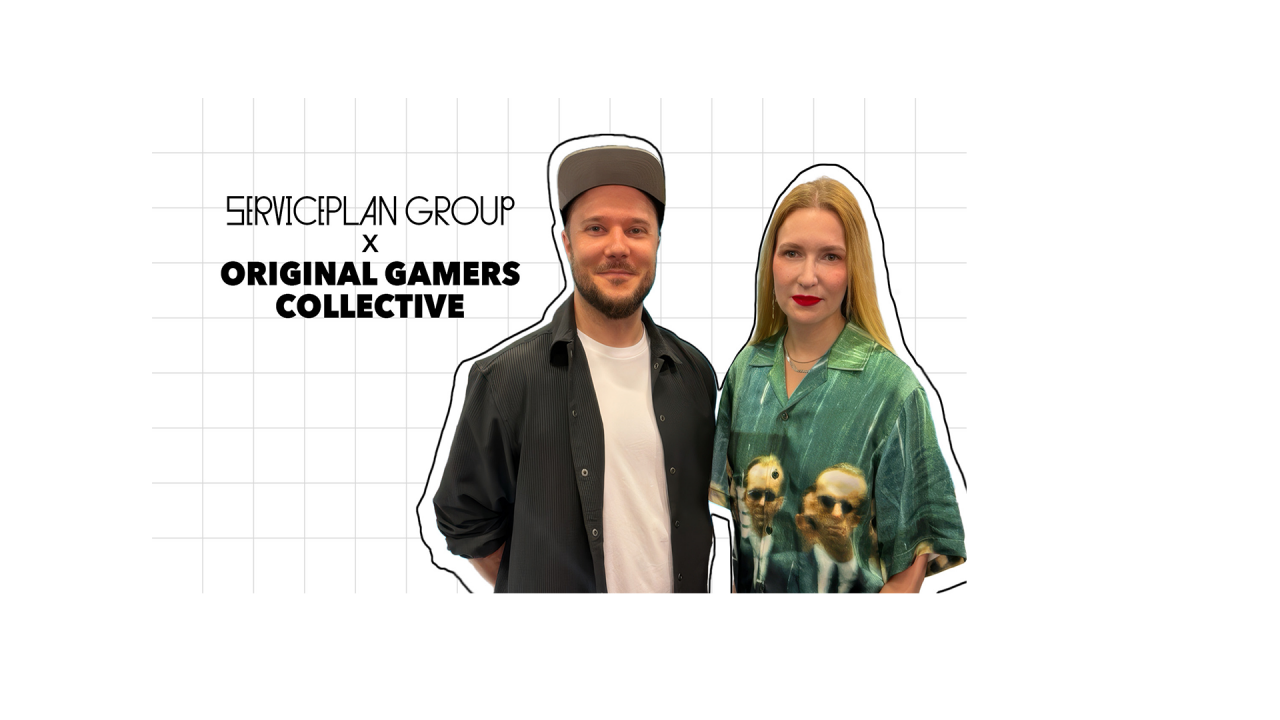
- Serviceplan Culture and OG Collective combine their expertise to develop new approaches for brands in the gaming environment and build cultural relevance in the long term.
- Franziska Gregor and Paul Dahlhoff show that reach alone does not create acceptance. Successful brands become part of communities instead of being mere senders of messages.
Gaming Culture: How Brands Go from Sender to Player
Gaming has long been relevant enough for brands to reliably buy reach there. A well-known creator, a sponsorship around a major title or an activation on Twitch very quickly generate visibility. But what remains once the campaign is over?
This is where Serviceplan Culture and OG Collective come in with their strategic collaboration. The two agencies do not primarily view gaming as one advertising channel among many, but as a cultural space with its own communities, fandoms, creators, events and platforms.
The partners are starting without a fixed joint product and initially want to develop new offerings for brands through the collaboration. Serviceplan Culture contributes its experience in Cultural Engagement, Community Building and brand management, while OG Collective brings its roots in gaming communities and its operational gaming expertise. A merger is not planned.
A first result is the whitepaper “The Patch Notes”, published for Gamescom. In it, the partners show how brands can participate in gaming culture without reducing gaming to sponsorship, reach or individual activations.
The basic idea is not new: brands should be less annoying in gaming and pay more attention to what communities are actually interested in. In practice, however, things quickly become quite complicated. How much freedom do creators get? How quickly is a brand allowed to react? Which forms of participation really work, and when would it be more credible to refrain from a gaming activation altogether?
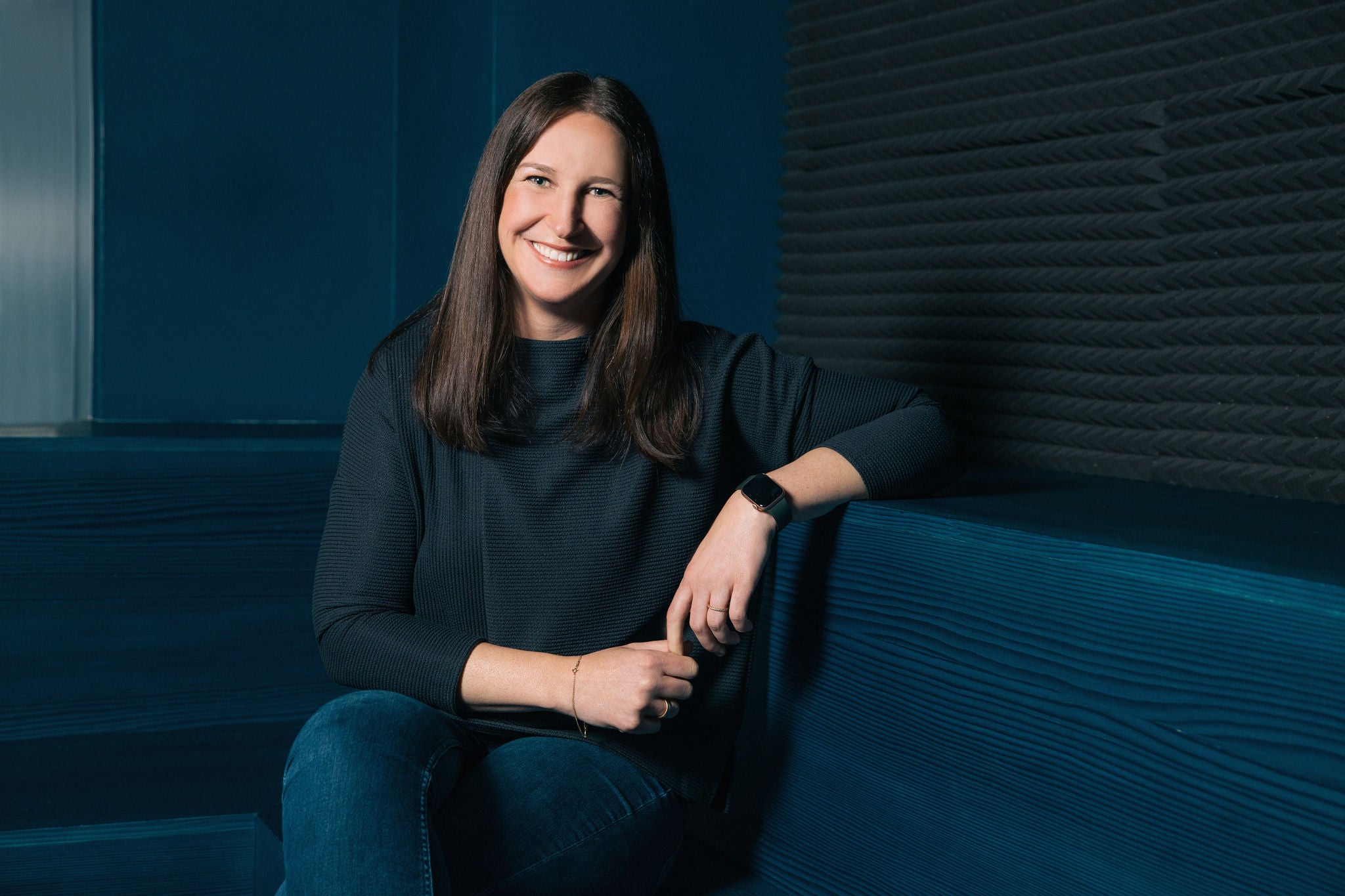
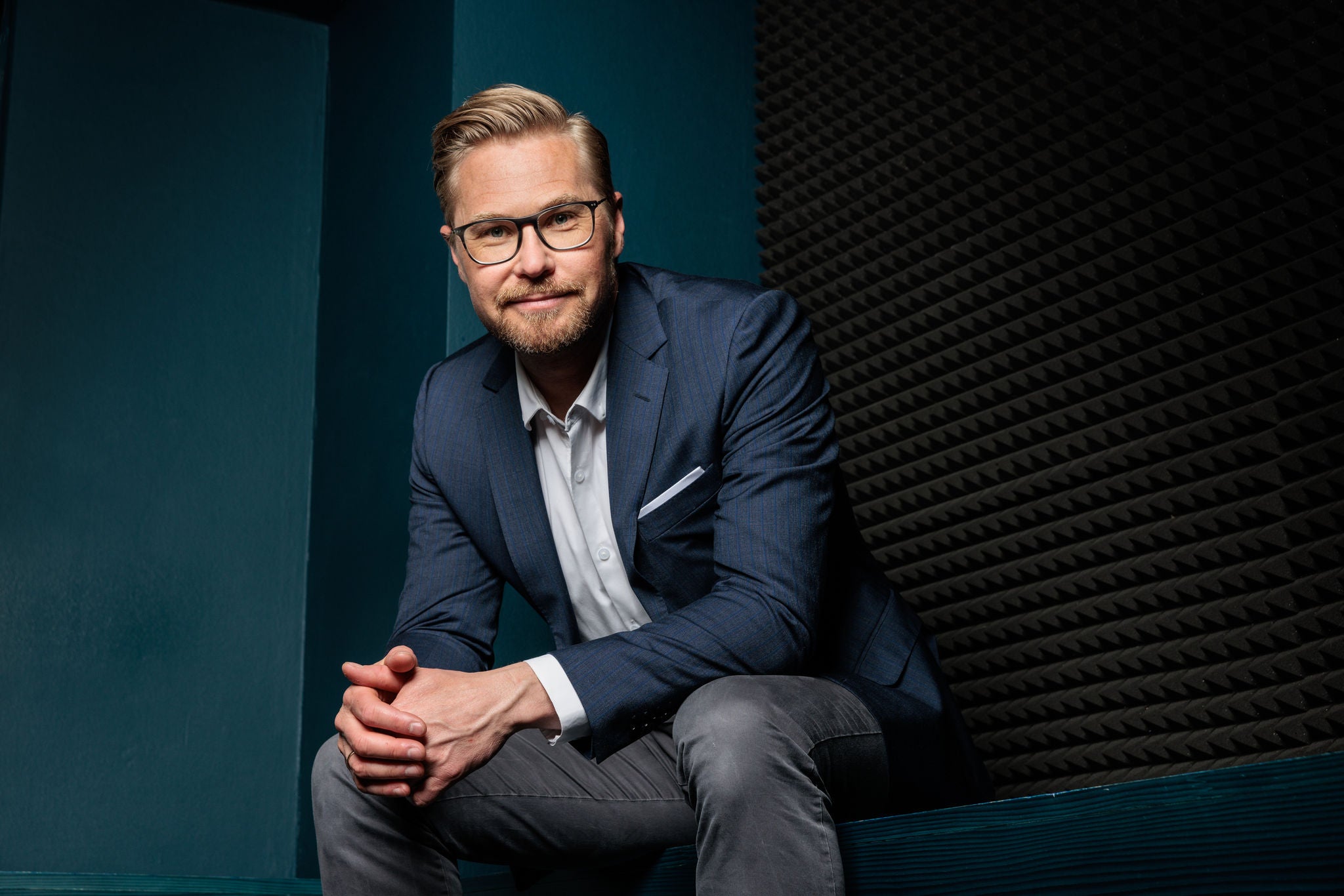
Franziska Gregor, Managing Director of Serviceplan Culture, and Paul Dahlhoff, CEO of OG Collective, discuss this in the interview.
“Anyone who wants to reach ‘gamers’ is usually still at the very beginning strategically.”
Brands often still view gaming too strongly as a reach or sponsorship channel. Where do you currently see the most common misconceptions?
Paul Dahlhoff: A common misconception is that gaming is already being credibly tapped into simply because a brand appears in an environment with a wide reach. For example, through a sponsorship, a well-known creator or a presence around a major title. But visibility is not the same as acceptance. Communities ask very specifically: Does the brand understand what is happening here? Does it contribute something? And does it stay longer than for a campaign flight?
The second misconception is treating gaming as a homogeneous target group. In reality, we are talking about very different communities with their own codes, platforms and expectations. Anyone who wants to reach “gamers” is usually still at the very beginning strategically.
Franziska Gregor: What I often see is this: brands start with themselves. They have a communication goal or a message and then consider how they can somehow translate it into gaming. I would start exactly the other way around: What is actually happening in the respective community right now? What are the people there concerned with? And is there something the brand can credibly contribute?
Because for me, gaming has long been more than just a channel. It is a cultural and entertainment space with its own communities, creators, platforms, events and codes. That is why it is not enough to simply add gaming as another component to the media plan. The brand needs to know what role it actually wants to play there.
“Would the format still have value without the brand logo?”
What distinguishes credible participation from a campaign that merely uses gaming aesthetics or well-known creators?
Dahlhoff: Credible participation begins with a concrete benefit for the community and a comprehensible reason for that participation. This can be access, entertainment, recognition, a platform, a shared experience or the solution to an actual problem. Gaming aesthetics are not irrelevant, but they come last.
A good test is: Would the format still have value if you removed the brand logo? If the answer is no, it is often more a case of advertising in a gaming look than a relevant contribution to gaming culture.
Gregor: For me, it starts with not automatically equating gaming with a particular game or a gaming creator. Entire cultural ecosystems are emerging around games today: merch and collectibles, board games, cosplay and fan art, music, fashion, live events, community spaces or formats of their own that go far beyond the actual game.
A fashion brand might talk about in-game skins, but equally about real-world merch or cosplay. A food brand can create a community event or a format around shared gaming moments.
It becomes credible when the brand understands where within this ecosystem it can actually contribute something. Not every brand has to become a gaming or entertainment provider itself. But it should be able to explain why it is here and what added value it creates for the community.
Community is more than just a new term for target group
What does the shift from “target group to community” mean in practice for brand management and campaign planning?
Gregor: A community is not simply a target group with a new name. I can describe and address a target group. A community, on the other hand, has a life of its own. People exchange ideas, produce content themselves, develop stories and content further, and influence each other.
For brands, this fundamentally changes planning. The question is no longer just: What do we want to say? But also: What can people do with an idea? Can they react, help shape it, develop something of their own from it, or connect with each other through it?
And it changes the time horizon. A campaign has a starting and ending point. A relationship with a community does not.
Dahlhoff: This also changes the briefing process. In addition to objectives, message and reach, questions are needed such as: Which community exactly do we mean? What are they already concerned with? Which people are trusted there? And what reason does this community have not only to notice the brand, but to interact with it?
How much control do brands have to give up?
Gregor: I don’t think brands have to give up control completely. But they have to distinguish between clear guidelines and the attempt to control every single reaction.
Brand values, brand safety and legal requirements are of course non-negotiable. But within this framework, creators and communities need freedom. If every spontaneous idea first has to go through several approval loops, the cultural moment has often already passed.
That is why good governance is so important to me: What is fixed? Where is there room for manoeuvre? And who is allowed to make quick decisions, on both sides? The more clearly this is defined beforehand, the easier it is to be flexible at the crucial moment.
Dahlhoff: Creators and communities need the freedom to respond in their own language. If every punchline, every comment and every spontaneous idea has to go through several approval stages, the format loses speed and credibility.
Giving up control therefore does not mean working without a plan. It means trusting the right people within clear rules.
Gaming has long since moved beyond the game itself
What role do creators, fandoms, events and Discord play compared to the actual game?
Dahlhoff: For many people, gaming today has long been more than the game itself. They watch streams, follow creators, discuss on Discord or Reddit, create fan art and cosplay, or meet at events. Some are deeply involved in a title without playing it every day.
For brands, many of the most interesting touchpoints are therefore primarily outside the games. Creators build closeness, fandoms develop stories further, Discord enables continuous exchange, and events turn relationships into a shared experience.
Gregor: For me, this interplay is now almost more important than the question of an individual channel. A moment at an event is streamed, clips, memes and creator content emerge from it, it is discussed on Discord, TikTok, YouTube or Reddit, and suddenly the whole thing may connect with music, lifestyle or another part of pop culture.
That is why planning by individual platforms often falls short. Brands should understand much more clearly how people move within a fandom or community and what role the different touchpoints play in that.
Not every brand needs gaming
Are there brands or sectors for which gaming is not the right cultural space?
Gregor: There are definitely situations in which gaming is not the right space for a brand. But not necessarily because its target group is not present there. Gaming today is so broad that you can reach many different people.
The more important question is: Does the brand actually have something credible to contribute there? If the only answer is “We want to reach young people” or “We need reach,” that should not be enough for us and we need to ask more closely.
And of course, there are products or categories where protection requirements, regulation or societal impacts play a particularly important role. Here, too, reach can never be the only argument for an activation.
Dahlhoff: The question should therefore not be: “Are our target groups in gaming?”, because for many brands the answer is yes. The more relevant question is: “Can we contribute something to a specific community that goes beyond our own advertising message?” If there is no good answer to that, you should also have the courage to refrain from an activation.
Reach measures contact, participation shows what comes of it
How can participation be measured meaningfully, and is there reliable evidence that it also leads to better brand impact or business results?
Dahlhoff: There is no single participation metric. Depending on the format, relevant metrics include active participation, repeat usage, time spent, intensity of conversation, contributions from the community itself, sharing and the quality of reactions.
For an event, it can also be crucial how many people actively participate in formats and whether the experience is subsequently carried forward online.
Gregor: I would not pit reach and participation against each other. Reach answers the question: How many people had the chance to see us? Participation shows us what became of that contact.
We therefore essentially look at three levels: attention, who did we reach? Participation, what did people do with the offering? And brand impact, did perception, trust, preference or perhaps even behaviour change?
Which KPIs are ultimately relevant depends on the role a brand wants to play. A single engagement rate cannot capture these different forms of impact.
Community participation should not automatically be equated with business success. A lot of comments or an active community are initially just a signal. It becomes reliable when we combine community and platform data with brand lift, surveys, qualitative analysis and, where possible, behavioural or business data.
Dahlhoff: Across the numerous projects of recent years, we have seen that people engage with and carry offerings forward much more intensively when they have been developed for the community rather than simply delivered to it. The era of pure broadcasting is over.
For Mastercard, with the Worlds Xperience, we transformed a 2,000-square-metre location into a walk-through League of Legends game world. This was accompanied by an exclusive watch party, interactive mini-games, game-themed catering, cosplayers and Germany’s 16 biggest League of Legends creators.
The result was the most-watched Twitch stream of the month, with more than 55,000 concurrent viewers at its peak. But more important to us was what happened around it: people did not just watch, they joined in, stayed and carried the experience forward themselves, through clips, comments and their own contributions. That is the kind of impact that simply cannot be seen in reach reporting alone.
Good ideas often die in the approval process
Where do brands fail more often: strategy, cultural understanding or internal approvals?
Gregor: Actually, rarely because of just one of these points. You can have a strategically very sound idea that does not work culturally at all. And you can have a fantastic cultural idea that gets smoothed out for so long in the approval process that hardly anything of it remains.
That is exactly why, with several clients, we try to connect these areas much earlier. One instrument for this is, for example, a Cultural Council, where we regularly bring different perspectives to the table: brand and strategy as well as social, media, creator and platform expertise, and of course people who are close to the respective communities and cultural developments.
This creates a bridge between what is currently happening culturally, what is strategically relevant for the brand, and what is actually feasible internally.
Dahlhoff: In practice, we often see companies starting out culturally bold, but then returning to classic advertising mechanisms during the approval process. An idea with genuine participation then gradually turns into controlled sender content.
That is why cultural ambition and internal decision-making capability need to be considered together from the very beginning.
“The era of isolated gaming activations is over.”
Do brands need less traditional campaign development and more ongoing community and cultural work?
Gregor: I wouldn’t say: fewer campaigns. I would say: fewer isolated campaigns.
Campaigns are still important. They can concentrate attention, create a big moment and set topics. But if a brand starts from zero again every time, it wastes a great deal of potential.
For me, campaigns are the peaks. Long-term community and cultural work provides the continuity in between: through listening, creator relationships, platform expertise, cultural understanding and formats that can be developed further.
That is exactly why our work as agencies is changing as well. It is no longer just about briefing, creation, launch and reporting, but increasingly about helping brands build a relevant role in culture and communities over a longer period of time.
Dahlhoff: The era of isolated gaming activations is over. Today, brands expect gaming not to run alongside the communications strategy, but to become part of it.
This requires both: specialists who come from gaming culture and truly know the communities, and partners who bring experience from other cultural spaces such as music, sport or fashion and translate the whole thing into brand management, content, PR and experience.
That is exactly what we are trying out with Serviceplan Culture. For anyone who wants to dive deeper: the eight theses on this can be found in the Patch Notes, available free of charge at thepatchnotes.de.
This article was first published by W&V.
Franziska Gregor
About the author
Franziska develops culturally relevant strategies, partnerships, and brand experiences for international brands. Her areas of focus include Cultural Strategy, Community Building, Sponsoring, Trend Research, as well as working with creators and talents. Her career began in the USA, after which she worked for agencies such as TBWA, DDB and GREY. Before her current focus on Culture Marketing, she built TikTok’s Creative Partnerships Team for the DACH region and the Netherlands. Franziska is a regular industry commentator, columnist and speaker at international conferences such as Cannes Lions, OMR and ADC.
This could also be of interest to you:


About Serviceplan
Serviceplan is Europe’s largest independent creative agency and the founding brand of the Serviceplan Group. Founded in Munich in 1970, Serviceplan is now firmly established internationally through the House of Communication model and works in an integrated manner across media, data, technology, and experience disciplines.
The agency stands for ÜberCreativity - an interdisciplinary approach that combines strategy, creation, and technology to position brands as culturally relevant players. Serviceplan delivers integrated communication solutions across all channels, from brand and campaign development to experience and content systems.
Serviceplan’s creative prowess is internationally recognized: The agency consistently ranks among the most successful independent agencies at the Cannes Lions, ADC, D&AD, and other international creative rankings, and has been named Independent Agency of the Year on multiple occasions.